Book Review

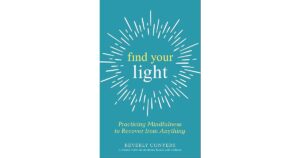
Conyers, B. (2018). Find Your Light: Practicing Mindfulness to Recover from Anything. Hazelden Publishing.

Overview

Find Your Light is a recovery-focused book that blends mindfulness, self-awareness, and values-based living to help individuals overcome addiction, emotional pain, and life adversity. While the book is not written explicitly from a behavioral science framework, many of its core principles align strongly with behavioral psychology, operant conditioning, and acceptance-based behavioral interventions such as ACT (Acceptance and Commitment Therapy).

From a behavioral perspective, the book can be viewed as a guide for behavior change through awareness, reinforcement, stimulus control, and values-driven action.

Behavioral Conceptualization
1. Behavior Is Learned and Maintained by Consequences

From an ABA standpoint, Conyers’ narrative illustrates how maladaptive behaviors (e.g., substance use, avoidance, emotional numbing) are learned responses shaped by reinforcement—often negative reinforcement (escape from pain, anxiety, or trauma).

Substance use functions as a temporary reinforcer, reducing distress.

Over time, this reinforcement strengthens the behavior despite long-term costs.

Conyers emphasizes recognizing these patterns, which aligns with functional behavior assessment (FBA) principles:

What function is this behavior serving for me right now?

2. Mindfulness as Discrimination Training

Mindfulness practices in the book can be conceptualized as discrimination training—teaching individuals to:

Notice internal antecedents (thoughts, emotions, bodily sensations)

Pause before engaging in automatic responses

Choose alternative behaviors

From a behavioral lens, mindfulness:

Increases stimulus control over behavior

Reduces impulsive, rule-governed behavior driven by private events

Strengthens self-management repertoires

This parallels ABA self-monitoring and ACT’s focus on defusion from private events.

3. Replacing Avoidance with Values-Based Action

A central theme of Find Your Light is moving toward values instead of away from pain. Behaviorally, this reflects:

Reducing experiential avoidance

Increasing approach behaviors aligned with long-term reinforcement

In ACT terms, Conyers encourages:

Acceptance of discomfort

Commitment to behaviors consistent with personal values

This is critical from a behavioral perspective because avoidance behaviors are negatively reinforced and often maintain psychological suffering.

4. Reinforcement, Self-Compassion, and Shaping

Conyers repeatedly emphasizes self-compassion, which behaviorally functions as:

A non-punitive environment for behavior change

Increased likelihood of persistence after errors or relapse

From an ABA lens:

Progress is shaped gradually

Small successes are reinforced

Harsh self-criticism acts as punishment and can suppress adaptive responding

This mirrors shaping procedures and trauma-informed behavioral practice.

5. Relapse as Part of the Learning Process

Rather than framing relapse as failure, Conyers frames it as information. This aligns with behavioral science:

Relapse = behavior returning under old contingencies

Indicates a need to modify antecedents, skills, or reinforcement systems

This perspective reduces shame and supports behavioral problem-solving rather than punishment.

Strengths from a Behavioral Perspective

Promotes self-awareness critical for self-management

Reduces punishment-based self-talk

Encourages values-driven behavior, increasing long-term reinforcement

Consistent with ACT, mindfulness-based ABA, and trauma-informed care

Highly applicable to clinical populations, including addiction, anxiety, and trauma

Limitations from a Behavioral Perspective

Lacks explicit behavioral terminology (e.g., reinforcement schedules, functional analysis)

Relies heavily on narrative and introspection rather than measurable behavior change plans

Would benefit from structured goal-setting and data tracking for behavior change

These limitations, however, make the book accessible to a broad audience and complementary to formal behavioral treatment rather than a replacement.

Clinical and Educational Applications

From an ABA and behavioral health standpoint, Find Your Light can be used as:

A supplemental text in addiction recovery programs

A values clarification tool in ACT-based interventions

Psychoeducation material for clients learning self-regulation

A trauma-informed resource for reducing avoidance and shame

Conclusion

From a behavioral perspective, Find Your Light is a values-based behavior change guide disguised as a mindfulness memoir. Beverly Conyers effectively illustrates how awareness, acceptance, and intentional action can weaken maladaptive reinforcement cycles and strengthen behaviors aligned with meaning and purpose.

While not a technical behavioral manual, the book strongly complements ABA, ACT, and mindfulness-based behavioral interventions, making it a valuable resource for clinicians, educators, and individuals seeking sustainable behavior change.

APA-Style References

Conyers, B. (2018). Find your light: Practicing mindfulness to recover from anything. Hazelden Publishing.

Hayes, S. C., Strosahl, K. D., & Wilson, K. G. (2012). Acceptance and commitment therapy: The process and practice of mindful change (2nd ed.). Guilford Press.

Cooper, J. O., Heron, T. E., & Heward, W. L. (2020). Applied behavior analysis (3rd ed.). Pearson.

Baer, R. A. (2003). Mindfulness training as a clinical intervention: A conceptual and empirical review. Clinical Psychology: Science and Practice, 10(2), 125–143. https://doi.org/10.1093/clipsy.bpg015

Leave a Reply

Your email address will not be published. Required fields are marked *